Welcome to The Illumenati. So your biggest prospect just dropped the question — "Do you have a SOC 2?" — and you smiled, nodded, and immediately Googled it under the table. Welcome to the compliance arena, founder. Population: confused.
Here's the thing nobody tells you: getting your first SOC 2 is less like filling out a form and more like an RPG where you didn't read the tutorial, your inventory is empty, and the first boss is already in the room. But don't panic. Every company that has a SOC 2 report today started exactly where you are right now — staring at a wall of acronyms and wondering why security has its own language.
This is the guide we wish we'd had. No jargon walls, no 47-page whitepapers, no "it depends" without telling you what it depends on. Just the unfiltered truth about what's ahead and how to actually survive it.
CHOOSE YOUR CLASS
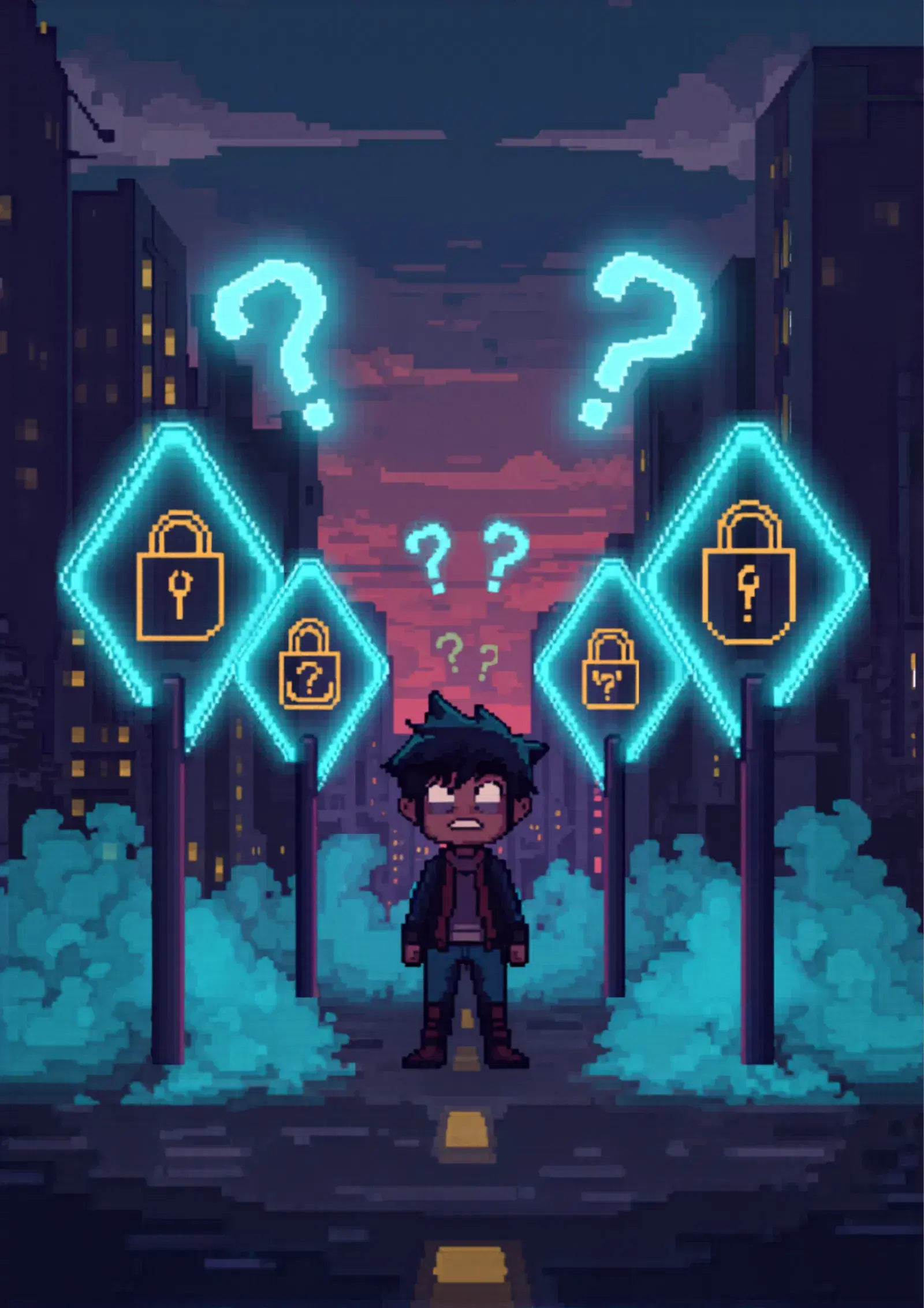
You've just entered the Framework Selection Screen and it looks like a skill tree designed by someone who hates you. SOC 2. HIPAA. ISO 27001. PCI DSS. CMMC. FedRAMP. GDPR. TISAX. Each one sounds equally important and equally terrifying. This is where most founders make their first mistake: framework FOMO.
"We should probably do SOC 2 AND ISO 27001 AND HIPAA, right? Our competitor has all three logos on their website." No. Stop. Put the frameworks down. You are a level 1 character trying to fight three bosses simultaneously. That's not ambition — that's a wipe.
The Golden Rule: Follow the Money
Which framework do you actually need? The answer is almost always hiding in your sales pipeline. If you're B2B SaaS selling to enterprises in the US, the answer is SOC 2 — roughly 90% of the time. If you're handling protected health information, it's HIPAA. If you're processing credit cards, PCI DSS. If you're selling to the Department of Defense, CMMC. Ask your prospects what they need, and start there.
Start with one. Get it done. Then layer on additional frameworks later — and here's the cheat code: most frameworks share 60-70% of the same controls. Your SOC 2 work makes ISO 27001 dramatically easier. Your HIPAA work overlaps heavily with SOC 2. The first framework is the hardest. Every one after that is an expansion pack, not a new game.
THE POLICY AVALANCHE
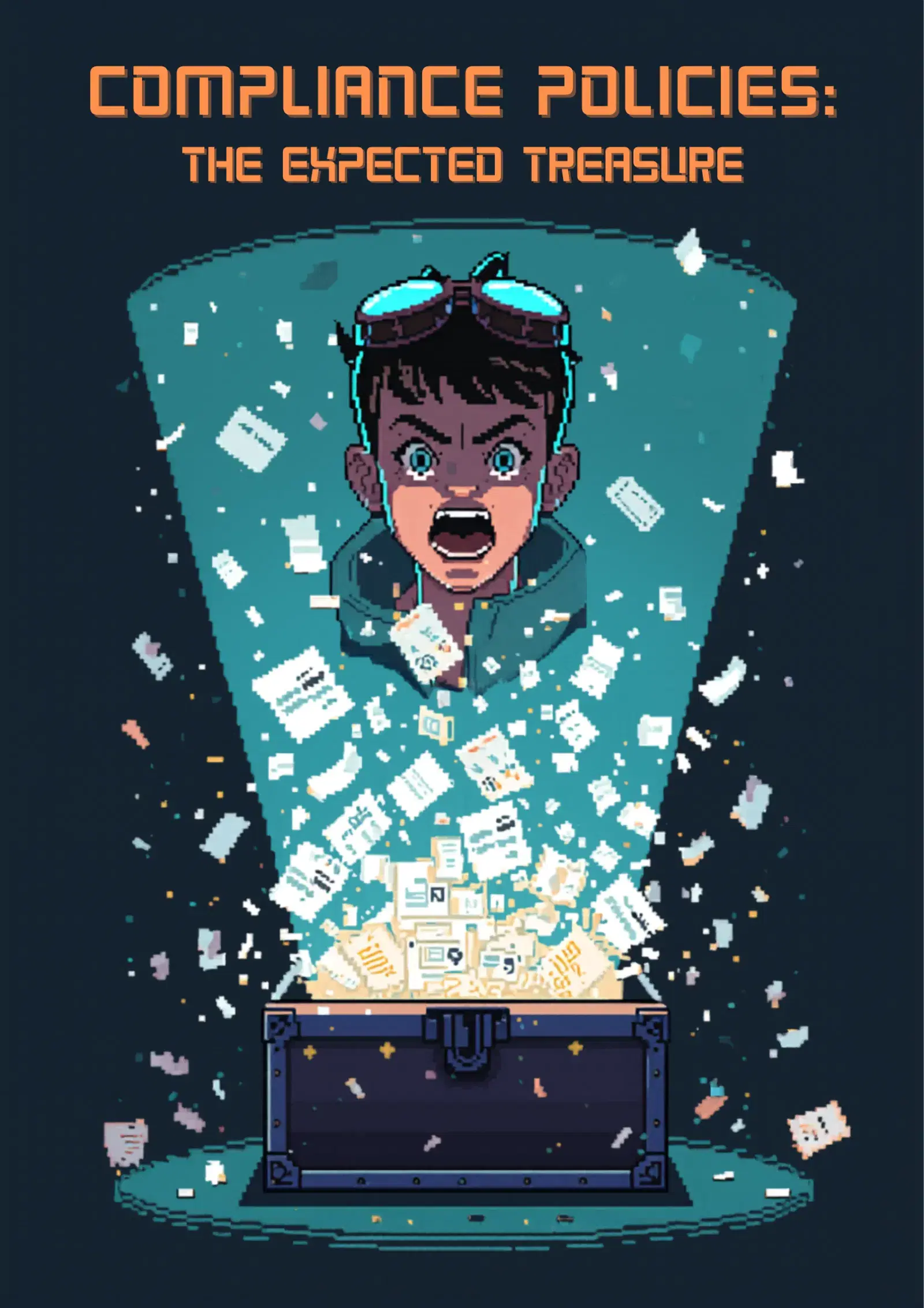
Nothing prepares a startup founder for the moment they discover they need somewhere between 15 and 25 security policies. Not guidelines. Not a paragraph in your employee handbook. Actual, formal, version-controlled policy documents with defined scopes, responsibilities, review cycles, and approval workflows.
"But we're a 12-person company! We just talk about this stuff!" Cool. Your auditor doesn't accept vibes as evidence. Here's a taste of what's coming:
And that's not even the full list. There's also encryption, logging and monitoring, asset management, password management, physical security, HR security, network security... You get the idea. It's a lot.
The Cheat Code: Don't Write From Scratch
Here's where founders waste months of their lives: trying to write policies from a blank Google Doc. Don't do this. GRC platforms like SecureFrame, Vanta, and Drata come with policy templates that are pre-mapped to compliance frameworks. You customize them for your organization, get leadership approval, and you're 80% of the way there.
Better yet, hire a vCISO who has done this dozens of times. They know which policies actually matter for your audit scope, how to tailor templates to your tech stack, and — critically — how to make policies that your team will actually follow instead of collecting dust in a forgotten folder.
EVIDENCE HOARDING 101
Welcome to the evidence collection phase — the part of compliance that turns confident startup founders into digital hoarders. Everything you do needs proof. Not "we do that" proof. Screenshot, log, configuration export, ticket history proof. The auditor wants receipts for everything.
Think of your auditor as a skeptical dungeon master who has heard every creative excuse in the book. "We definitely do access reviews." Show me. "We patch our systems regularly." Show me the logs. "We have change management." Show me the pull request approvals, the deployment pipeline, the rollback procedure.
The Evidence Hit List
Here's a non-exhaustive sample of evidence you'll need to produce. This is just for SOC 2 — other frameworks have their own evidence requirements on top:
Automate or Suffer
Manually collecting evidence is like grinding for XP by fighting slimes — technically possible but painfully slow and soul-crushing. This is where a GRC platform pays for itself. Platforms like SecureFrame, Vanta, and Drata integrate directly with your cloud providers, identity providers, HR systems, and dev tools to automatically pull evidence and map it to controls.
Set this up early. Not the week before the audit. Not "when we get to it." Day one of your compliance journey, get your GRC platform connected and start building your evidence library. Future you will send present you a thank-you card.
THE BOSS FIGHT
The audit. The big one. The reason you've been stress-eating snacks and questioning your career choices for the past three months. It's here, and your auditor has arrived with a spreadsheet that would make a tax attorney weep.
Here's what nobody tells you about the actual audit experience: it's mostly just answering questions and providing evidence. That's it. The auditor isn't trying to trick you. They're not your enemy. They're following a structured process to evaluate whether your controls are designed properly (Type 1) or operating effectively over time (Type 2).
That said, some of the questions will catch you completely off guard:
The Readiness Assessment: Your Practice Run
This is the most important piece of advice in this entire article: do a readiness assessment before your actual audit. A readiness assessment (sometimes called a gap analysis) is a practice run where an expert reviews your controls, policies, and evidence against the audit criteria and tells you exactly where you're falling short.
Think of it as a practice boss fight. You get to see the attack patterns, identify your weak spots, and gear up before the real encounter. A good vCISO will run this for you, find the gaps, help you remediate, and make sure you walk into the actual audit with confidence instead of prayers.
ACHIEVEMENT UNLOCKED

You did it. The auditor has issued your SOC 2 Type 1 report. Your sales team is already updating the pitch deck. Your prospects are nodding approvingly. That security questionnaire that used to take three weeks? Now you just send the report. You've leveled up from "we take security seriously" (everyone says that) to "here's independent proof" (almost nobody has that).
Take a moment to celebrate. Seriously. This is hard, especially for a startup. You just built a security program, wrote policies, collected evidence, survived an audit, and earned a report that Fortune 500 companies will actually accept. That's a massive achievement.
But Wait — There's a New Game+
Here's the part nobody wants to hear: Type 1 is just the beginning. Your Type 1 report says your controls were designed properly at a specific point in time. Your prospects (and their security teams) are going to start asking for a Type 2 — which proves your controls operated effectively over a period of time (usually 6-12 months).
The good news? If you set things up right during your Type 1 journey — GRC platform connected, evidence collection automated, policies actually followed — Type 2 is dramatically easier. You're not starting over. You're just proving that what you built actually works over time. It's New Game+ with all your gear and levels intact.
Compliance isn't a destination — it's an ongoing campaign. But you've cleared the tutorial, you have your loadout, and you know the map. The hardest part is behind you.
Need a guide for the compliance arena? Illumen's vCISO services are built for startups navigating their first (or fifth) compliance framework. We've helped dozens of companies go from "what's a SOC 2?" to "here's our clean report." No gatekeeping, no jargon, no 200-page proposals. Just practical, expert guidance from people who actually enjoy this stuff.